Story by Sherine Atieno and Photos by Ondari Ogega
Upcoming scientific commentary highlights hidden factors driving recurrent Ebola outbreaks and the need for stronger healthcare preparedness
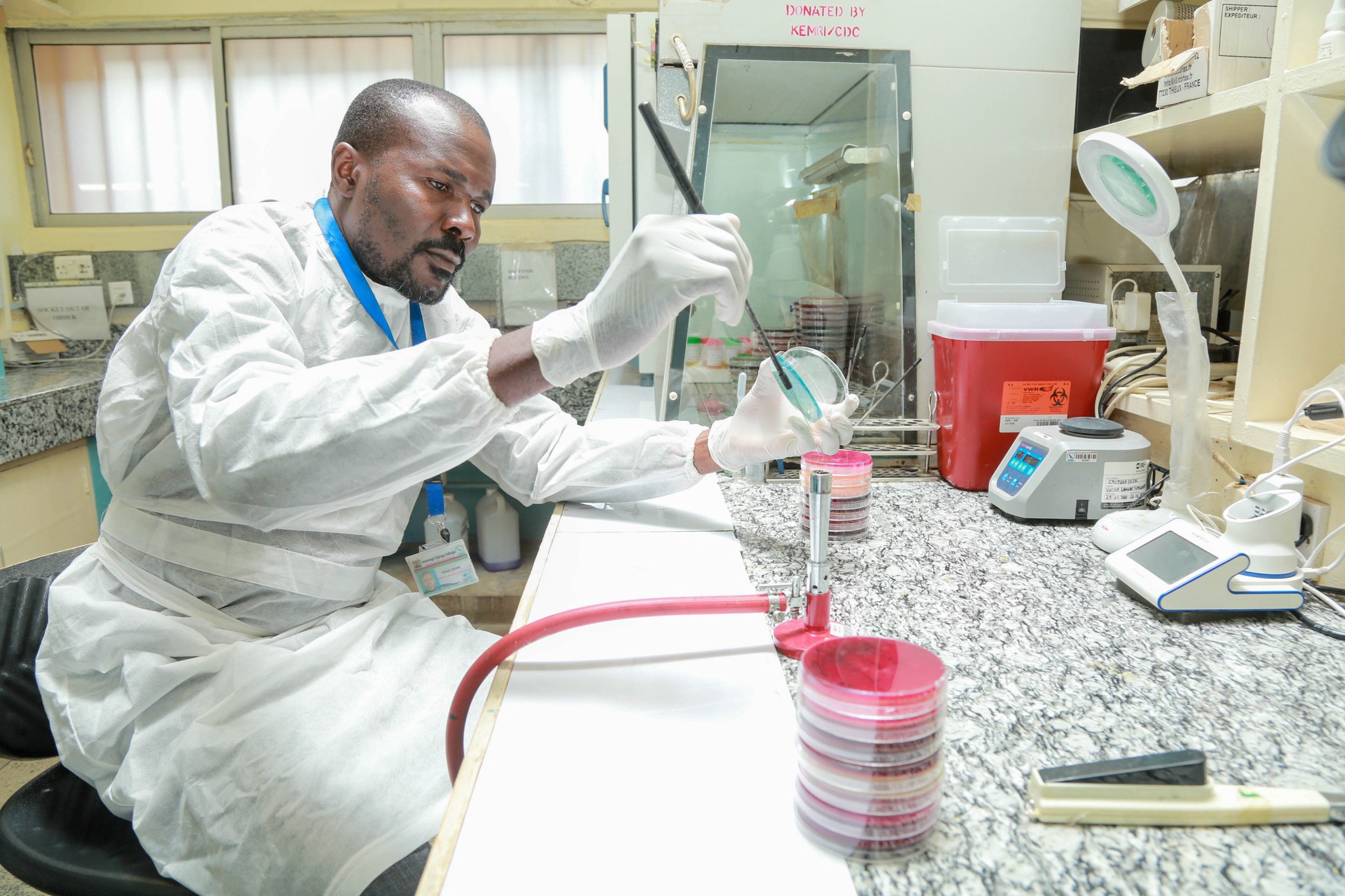
As countries continue strengthening preparedness against emerging and re-emerging infectious diseases, a microbiologist at Jaramogi Oginga Odinga Teaching and Referral Hospital (JOOTRH) is calling for greater vigilance among healthcare workers to help prevent future Ebola outbreaks.
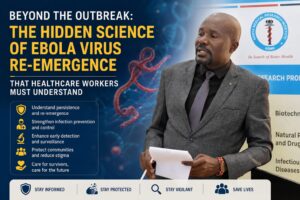
In a scientific commentary titled “Beyond the Outbreak: The Hidden Science of Ebola Virus Re-emergence That Healthcare Workers Must Understand,” scheduled for publication, Silas Awuor (doctorate student), a microbiologist at JOOTRH and researcher at Kisii University, explores the hidden biological, ecological, and healthcare-system factors that continue to contribute to the recurrence of Ebola Virus Disease (EVD) despite significant advances in surveillance, vaccination, outbreak preparedness, and infection prevention.
Ebola Virus Disease remains one of the world’s most dangerous infectious diseases, with outbreaks capable of causing high mortality rates and placing immense pressure on already strained healthcare systems. While major investments have been made in outbreak response and preparedness across Africa, the commentary argues that important scientific drivers of Ebola re-emergence remain poorly understood by many healthcare workers and communities.
One of the most significant scientific findings highlighted in the publication is the ability of the Ebola virus to persist in certain parts of the body long after a patient has recovered. Studies conducted following previous outbreaks found that Ebola virus genetic material can remain detectable in semen, breast milk, ocular fluids, and the central nervous system for prolonged periods.
Research by Diallo and colleagues in 2016 linked a resurgence of Ebola in Guinea to viral persistence in a survivor’s seminal fluid more than 500 days after the initial infection. Other studies have documented rare cases of relapse associated with persistent virus in immune-privileged sites within the body.
“Understanding viral persistence is critical because recovered patients may still represent potential transmission sources under specific conditions,” notes Silas Awuor (doctorate student) in the commentary.
The publication further examines the environmental and ecological factors driving Ebola outbreaks. Fruit bats are widely believed to be the natural reservoir of the virus, although transmission pathways are not fully understood. Human activities such as deforestation, mining, agricultural expansion, and bushmeat hunting continue to increase contact between people and wildlife, creating opportunities for zoonotic spillover.
According to the commentary, climate change and environmental disruption may also alter wildlife migration patterns and human-animal interactions, potentially increasing the risk of future outbreaks. The study therefore advocates for a One Health approach that integrates human, animal, and environmental health systems in disease prevention and surveillance.
The commentary also warns that healthcare-associated transmission remains a major concern. During previous Ebola outbreaks, large numbers of healthcare workers became infected due to delayed diagnosis, inadequate personal protective equipment, overcrowding, and weak infection prevention and control systems.
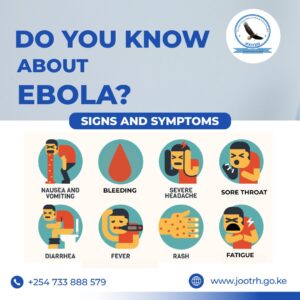
Ebola often presents with symptoms that resemble common diseases such as malaria and typhoid fever, making early recognition difficult. Initial symptoms may include fever, severe weakness, headache, muscle pain, vomiting, diarrhoea, and abdominal pain. Without a high index of suspicion, these similarities can delay diagnosis and increase exposure risks among healthcare workers.
Silas Awuor (doctorate student) emphasizes that continuous professional education is essential to ensure healthcare workers remain alert to emerging scientific evidence surrounding Ebola transmission and outbreak dynamics. The publication calls for regular training on infection prevention and control practices, patient triage, safe sample handling, outbreak recognition, and risk communication.
The study also highlights the growing role of genomic surveillance and advanced diagnostic technologies in strengthening outbreak preparedness. Modern genomic sequencing allows scientists to track transmission chains, monitor viral evolution, and determine whether outbreaks originate from new animal-to-human transmission events or from viral persistence among survivors.
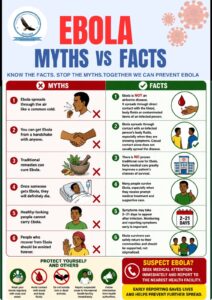
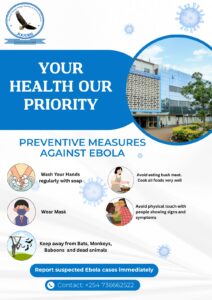
Beyond healthcare facilities, the commentary encourages communities to play an active role in preventing Ebola transmission. Recommended preventive measures include frequent hand hygiene, avoiding direct contact with blood and body fluids of infected persons, seeking medical attention promptly when symptoms develop, and avoiding contact with sick or dead wild animals that may carry the virus.
The publication concludes that preventing future Ebola outbreaks will require more than emergency response measures alone. It calls for stronger infection prevention systems, investment in rapid diagnostic technologies, enhanced laboratory capacity, continuous healthcare worker education, and multidisciplinary collaboration across public health, environmental, and animal health sectors.
“Understanding the hidden science behind Ebola outbreaks may ultimately become one of the most important tools for preventing future epidemics and strengthening healthcare resilience in endemic regions,” the commentary states.
As the threat of emerging infectious diseases continues to evolve, the study serves as a timely reminder that preparedness begins long before an outbreak occurs. Through research, surveillance, education, and innovation, healthcare workers remain at the forefront of efforts to protect communities and strengthen health systems against future public health threats.