Story by Stacy Owino and Photos by Ian Obadha
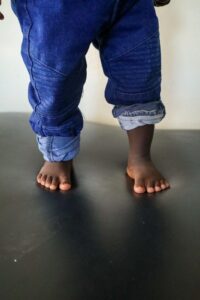
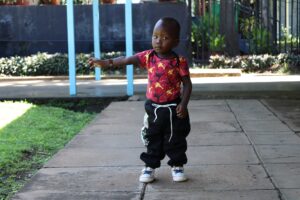
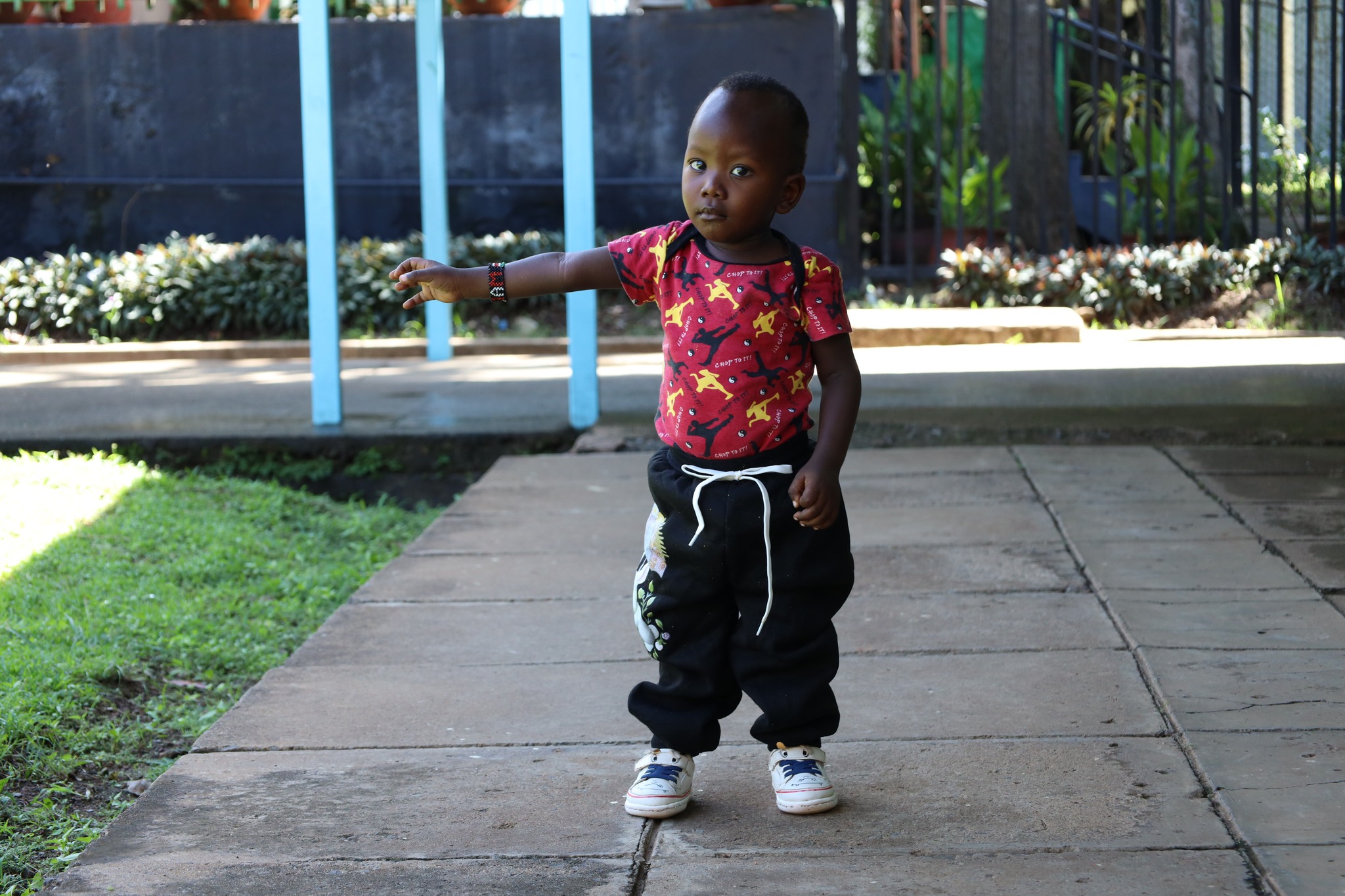
“After treatment, he can now stand and walk well.”
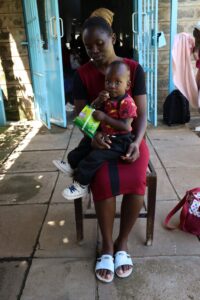
The words are simple, but for Joy Munagi, a resident of Nyalenda in Kisumu, they represent months of perseverance, sleepless nights, and unwavering hope.
Today, as the world marks World Clubfoot Day, Ms. Munagi looks at her two-year-old son Liam Carson running, standing, and exploring his surroundings with confidence; something that once seemed uncertain when she first noticed that one of his feet was not developing normally.
For every mother, the first few months of a child’s life are filled with a mix of exhaustion and wonder. You watch how they sleep, how they grow, and how they interact with the world. But in March last year, Ms. Munagi noticed something unusual about her baby boy’s foot.
“I thought it was just normal for the foot to be the way it was.” She recalls.
As concern grew, she searched online for answers but the images she found of clubfoot left her frightened.
“First of all, I googled what clubfoot is and when I looked at the pictures, it was not something good.”
Clubfoot, medically known as congenital talipes equinovarus (CTEV), is a birth condition in which one or both feet are twisted inward and downward. If left untreated, the condition can cause lifelong disability, affecting a child’s ability to stand, walk, and participate fully in daily life.
Globally, between 176,000 and 200,000 children are born with clubfoot every year, with most cases occurring in low- and middle-income countries. In Kenya, an estimated 1,200 to 1,650 babies are born with the condition annually. Fortunately, early treatment using the Ponseti Method can successfully correct more than 90 per cent of cases.
While the internet brought anxiety, Ms. Munagi’s family offered understanding and support.
“They had to accept it,” she says softly.
The breakthrough came through a friend whose own child had previously been treated for clubfoot in both legs and was now walking normally. Encouraged by that success story, Ms. Munagi was advised to seek treatment at Jaramogi Oginga Odinga Teaching and Referral Hospital (JOOTRH).
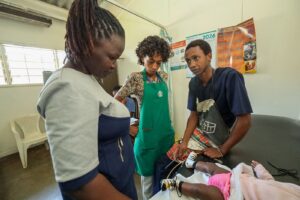
Liam began treatment at just three months old.
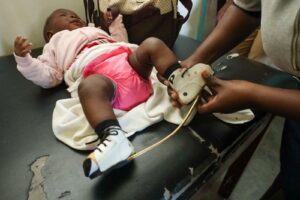
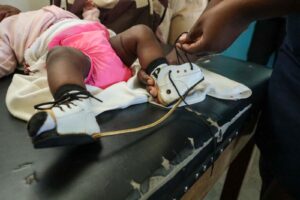
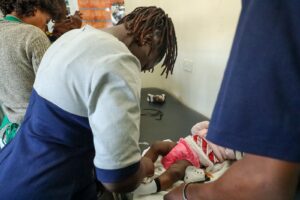
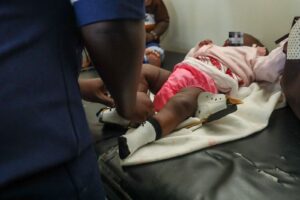
The journey involved serial plaster casting followed by corrective bracing. While the treatment was effective, adapting to the brace was not easy for a growing baby eager to move.
“He would cry. He did not want to put them on,” The mother remembers.
The nights were particularly difficult as the brace made it hard for Liam to turn comfortably while sleeping. Yet her mother remained committed to the treatment plan, carefully following every instruction provided by the healthcare team.
Unlike many parents who face stigma when raising children with congenital conditions, Ms. Munagi found encouragement from those around her.
Gradually, the improvements became visible.
Through regular follow-up clinics, physiotherapy sessions, and consistent brace use, Liam’s leg grew stronger.
“At least you could see the leg trying to strengthen,” Ms. Munagi says.
Before treatment, Liam’s foot turned inward, making it impossible for him to stand independently.
As JOOTRH joins the rest of the world in commemorating World Clubfoot Day, Liam’s story serves as a reminder that clubfoot is treatable and that early intervention can give children the opportunity to live active, independent lives.
For Ms. Munagi, every step her son takes is proof that persistence, and access to timely specialized care can change a child’s future.