Story by Eddah Macharia and Photos by Lorraine Faith
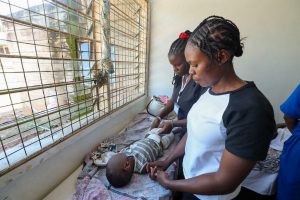
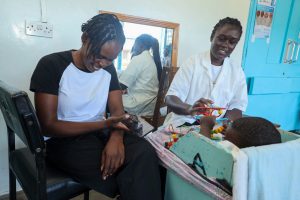
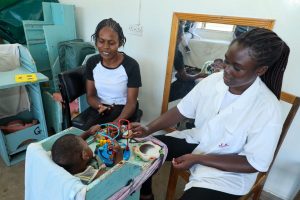
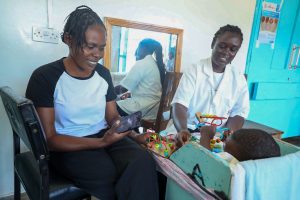
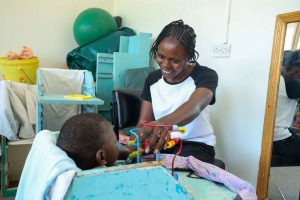
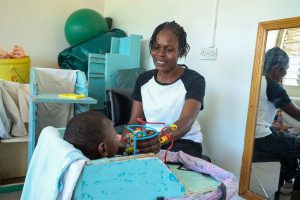
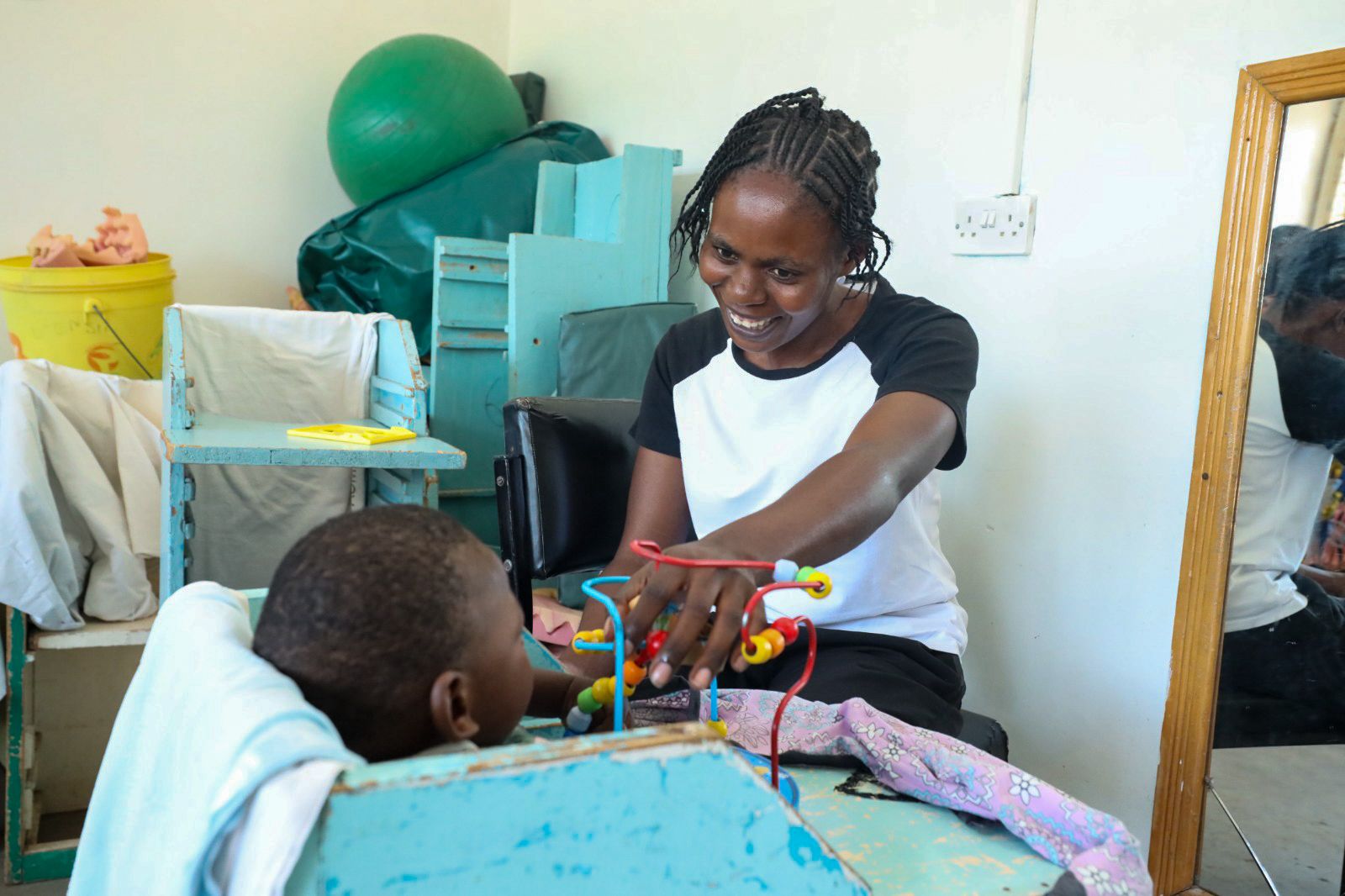
Cradling her one-year-old son during a therapy session at Jaramogi Oginga Odinga Teaching and Referral Hospital (JOOTRH), Mary Atieno reflects on the difficult journey her family has faced since the child was born with cerebral palsy.
What began as fear, uncertainty, and endless questions gradually turned into regular rehabilitation sessions, medical assessments, and a determined effort to improve her son’s quality of life. Like many parents raising children with developmental challenges, Ms. Atieno has had to navigate emotional exhaustion, financial strain, and the demanding responsibility of securing consistent care for her child.
Today, however, the young mother speaks with gratitude as she watches her one-year-old son slowly make progress through occupational therapy sessions at Jaramogi Oginga Odinga Teaching and Referral Hospital.
Three times every week, every Monday, Wednesday, and Friday, Ms. Atieno travels to the hospital’s Occupational Therapy Department for her son’s rehabilitation sessions, a journey she has faithfully maintained since the child was only five months old.
“I am grateful to this department because I have seen improvement in my child,” she says softly while holding her son during one of the therapy sessions. “The therapists handle both the children and parents with care, and they encourage us even during difficult moments.”
Inside the Occupational Therapy Department, healthcare workers quietly transform lives through specialized rehabilitation services aimed at helping patients regain independence and improve their quality of life. The department serves children with developmental delays, patients recovering from injuries, and individuals living with conditions that interfere with movement, coordination, concentration, communication, and other daily activities.
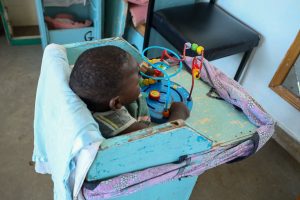
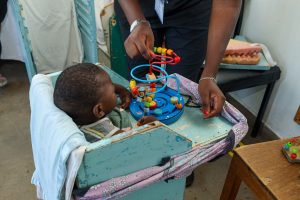
Within the therapy rooms, patients participate in carefully guided exercises that may appear simple to outsiders but carry life changing meaning for families struggling with disability and delayed development. Some children are guided through activities that improve hand coordination and concentration, while others undergo exercises meant to strengthen movement, posture, balance, and interaction with their surroundings.
For Ms. Atieno’s son, each therapy session represents another opportunity for growth and improvement. Small achievements that many families may take for granted have become major milestones worth celebrating.
According to specialists at the department, occupational therapy is not only about physical rehabilitation. It is also about restoring confidence, dignity, emotional wellbeing, and helping patients participate fully in everyday life.
Healthcare workers explain that early intervention plays a very important role in improving outcomes for children living with developmental conditions such as cerebral palsy. They encourage parents and caregivers to seek medical assessment and rehabilitation immediately they notice delayed milestones, poor coordination, movement difficulties, communication challenges, or concentration problems among children.
The department works closely with physiotherapists, doctors, nurses, orthopedic specialists, and caregivers to ensure patients receive comprehensive rehabilitation support. Therapists note that teamwork and consistency are essential because rehabilitation often requires patience, emotional support, and continuous follow-up from both families and healthcare professionals.
Ms. Atieno says one of the biggest challenges many families face is the stigma associated with disability. According to her, some parents still choose to hide children living with developmental conditions because of fear of discrimination or negative attitudes from society.
“There are parents who hide their children because of fear and stigma,” she explains. “But a child is still a child regardless of the condition. They deserve love, care, and the chance to interact with other people.”
She encourages parents not to isolate children living with disabilities but instead seek medical support and therapy early because rehabilitation can greatly improve a child’s quality of life.
Despite the visible progress made by her son, the journey has not been easy. Ms. Atieno admits that attending therapy sessions three times every week comes with heavy financial demands, especially for families already struggling economically. Transport costs, hospital expenses, and balancing daily responsibilities often become overwhelming.
“There are many expenses involved,” she says. “Sometimes it becomes difficult financially, but I continue bringing my child because I can see the therapy is helping him.”
Healthcare workers at the department acknowledge that rehabilitation is usually a gradual process that requires patience and commitment. While some patients may show improvement after a short period, others require months or even years of continuous therapy and family support.
Even with these challenges, the Occupational Therapy Department at JOOTRH continues to serve as a source of hope for many families navigating difficult circumstances. Through compassion, patient centered rehabilitation, and specialized care, the department continues to strengthen the hospital’s commitment to improving lives across the region.
For Ms. Atieno and many other caregivers walking through the department’s doors, occupational therapy has become more than a medical service. It has become a journey of rebuilding hope, restoring dignity, and giving children living with disabilities the opportunity to live fuller and more independent lives.