Story by Esther Adhiambo and Lynne Ayuma and Photos by Lorraine Faith
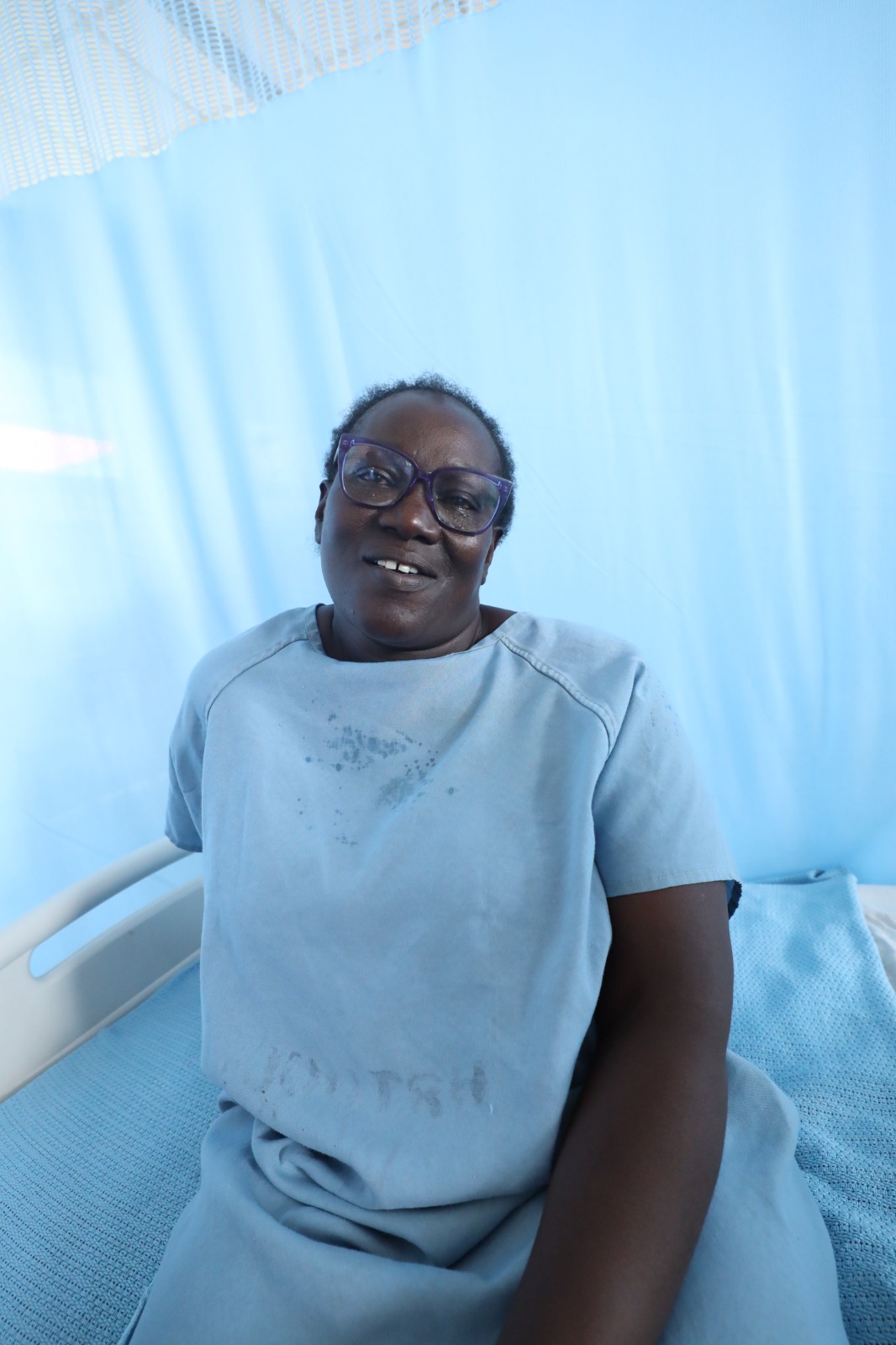
For nearly two years, 46-year-old Emily Akinyi Okech from Bondo lived with a condition that affected not only her health but also her peace of mind. Persistent bleeding during bowel movements, recurrent diarrhoea, and the presence of pus left her searching for answers and relief.
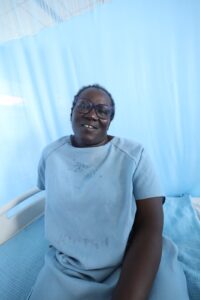
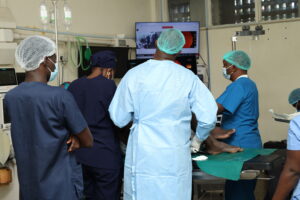
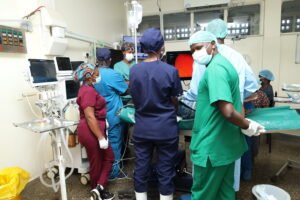
Today, however, Ms. Akinyi is smiling again after receiving specialized care through the ongoing Colorectal Surgical Camp at Jaramogi Oginga Odinga Teaching and Referral Hospital (JOOTRH), a programme aimed at diagnosing and treating a wide range of colorectal conditions.
“I used to notice blood stains whenever I passed stool. It felt like there were cuts inside that caused the bleeding,” Ms. Akinyi recalls.
Her search for treatment began at Bondo Hospital, where she was initially diagnosed with Helicobacter pylori (H. pylori), a bacterial infection that commonly affects the stomach. She diligently took medication for nearly two years. At another point, she was informed that intestinal worms could be contributing to her symptoms and received further treatment.
Despite these interventions, her symptoms persisted. Determined to find answers, Emily underwent a colonoscopy, a specialized procedure that allows doctors to examine the inside of the large intestine (colon) and rectum using a thin flexible tube fitted with a camera. Colonoscopy is considered the gold standard for diagnosing many colorectal conditions because it enables doctors to identify abnormalities, collect tissue samples (biopsies), and detect diseases at an early stage.
Her first colonoscopy revealed inflammation in the colon. A biopsy was performed and fortunately showed no evidence of cancer. Following six months of treatment, her symptoms improved significantly. However, in March 2026, the symptoms returned. Hope came through an unexpected source when a nurse who was a friend of her son informed her about the JOOTRH Colorectal Surgical Camp. Encouraged by the recommendation, Ms. Akinyi travelled to JOOTRH on June 2, 2026, seeking specialized care.
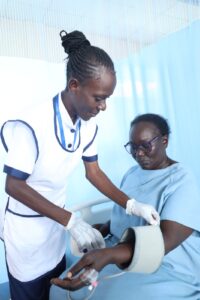
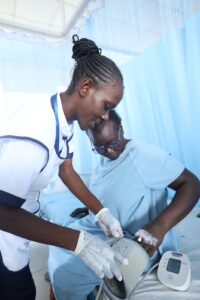
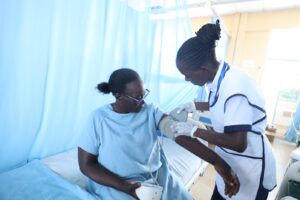
Following assessment by the colorectal team, she underwent a colonoscopy on June 3 as part of the camp’s services.
The colorectal camp, running from June 1 to June 5, 2026, offers screening, diagnosis, colonoscopy procedures, and surgeries for both cancerous and non-cancerous colorectal diseases. These include haemorrhoids (swollen veins around the anus and lower rectum), anal fissures (small tears in the lining of the anus), perianal abscesses, colorectal polyps, inflammatory bowel conditions, and cancers affecting the colon, rectum, and appendix.
According to specialists, many colorectal diseases can be successfully treated when detected early. Warning signs that should prompt medical evaluation include blood in stool, persistent abdominal pain, constipation, diarrhoea, unexplained weight loss, changes in bowel habits, or pain during bowel movements.
For Ms. Akinyi, the procedure marked a turning point. “It has not been an easy journey for me and my family, but now I feel hopeful again. My life has taken a new turn,” she says.
She also expressed appreciation for the healthcare workers who attended to her throughout the process and highlighted the importance of seeking medical care early rather than suffering in silence. The camp is improving access to specialized colorectal care through support from SHA, which covers eligible screenings, diagnostics, surgeries, hospitalization, and treatment costs for registered beneficiaries, easing the financial burden on patients.
Ms. Akinyi now urges others not to ignore persistent symptoms, emphasizing that early screening and timely treatment can prevent complications and save lives.