Story by Philister Adhiambo, Mercy Chloe and Carolyne Nyongesa
Photos by Ondari Ogega
“When I qualified, we were only five men and 45 women, and this was a big challenge to me,” recalls Lawrence Waguma. In a society that often paints nursing with a strictly feminine brush, Lawrence chose to step into the ward not for prestige or influence, but to redefine what it means to care.
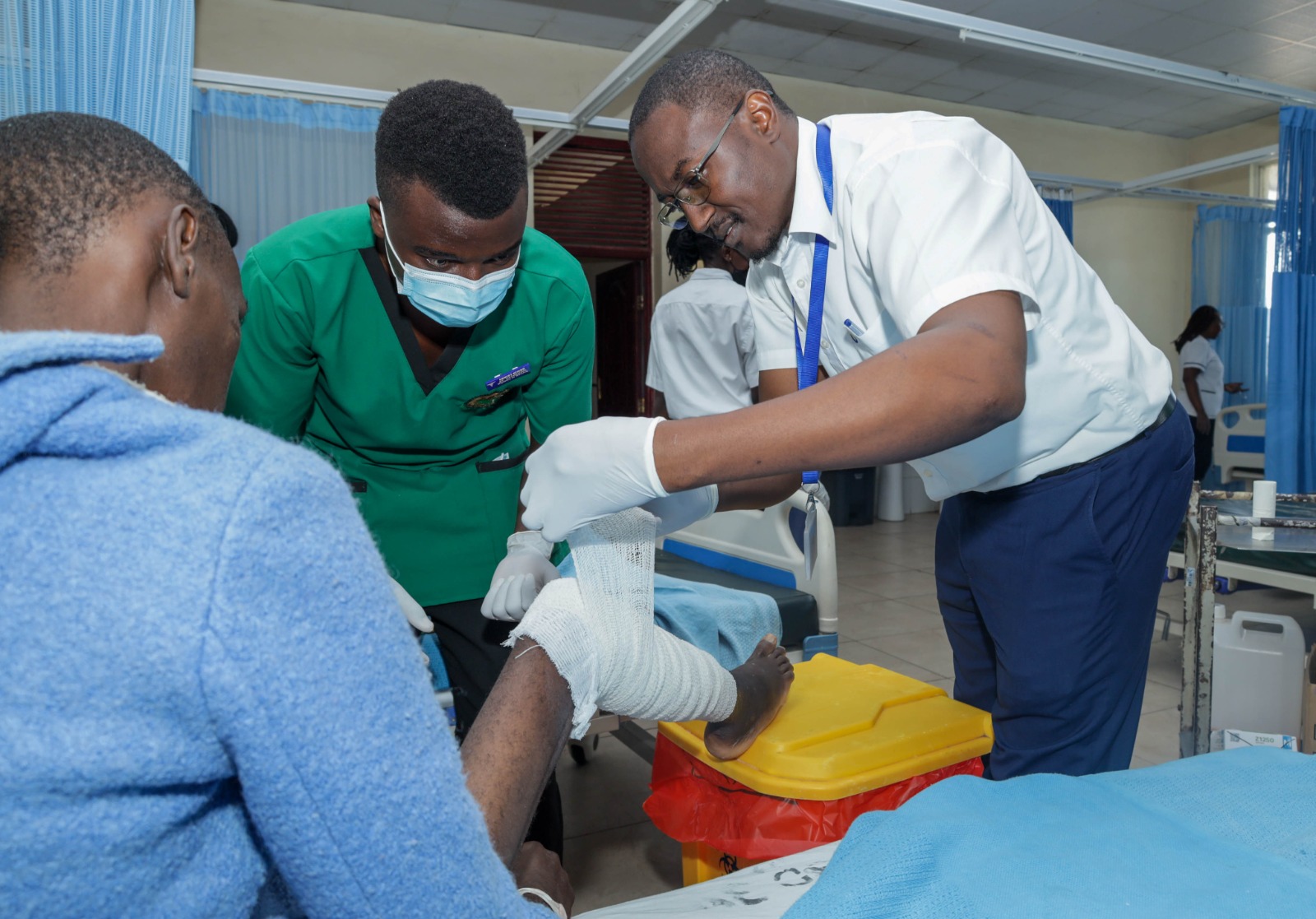
Today, Waguma serves as the Deputy In-Charge of the Surgical Ward at Jaramogi Oginga Odinga Teaching and Referral Hospital (JOOTRH). His journey, which began in 2013, is a testament to the fact that compassion knows no gender.
Waguma’s path was paved by family influence. While still in high school, he watched his sister—a nurse—navigate her profession with a distinct “care and loving spirit.”
“Because of that care she had for her patients, I felt that this is what I wanted to do,” he says.
What began as a simple observation of his sister’s kindness evolved into frequent hospital visits. He found himself admiring the way nurses attended to the vulnerable, sparking a deep-seated desire to experience that level of service firsthand.
Entering medical training college as a significant minority was an immediate hurdle, but Waguma was prepared to challenge the status quo. To him, nursing is built on service and the willingness to stand with people during their darkest moments—traits that are fundamentally human, not gender-specific.“It is not about the gender; it is about helping one another,” Waguma explains. “There is a perception that a man cannot be a caregiver. I wanted to change that narrative and show society that men can excel in these roles and be the people they desire to be.”
Waguma’s responsibilities are vast.
His day begins early, as he reviews night shift reports and navigates digital platforms to track patient admissions and discharges. After coordinating the day’s surgical programs, he shifts his focus to the next generation of healthcare workers. As a mentor, he often encounters male students who feel discouraged or out of place. He takes it upon himself to provide the counselling and motivation they need to persevere, ensuring they don’t let stereotypes derail their careers.
Beyond the administrative duties, Waguma’s driving force remains humanity. He has even worked as a reproductive health nurse, a field where male presence is often scrutinized, yet he embraced it as a calling rooted in empathy. “Seeing people suffer and realizing that even small acts of care can restore hope became a personal source of motivation,” he notes.
Waguma is quick to acknowledge that he doesn’t work in a vacuum. He credits his female colleagues for being a vital support system, especially in situations where patients initially express a preference for a female nurse. This spirit of cooperation has fostered a sense of unity at JOOTRH.
He concludes with a message of gratitude: “I celebrate all the female nurses and appreciate them for the support and love they have shown us in this field, and for the incredible care they give to every patient.”