Story by Sherine Atieno and Photos by Ian Obadha
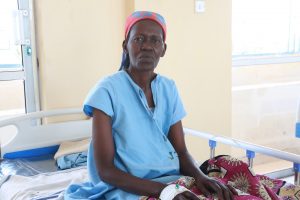
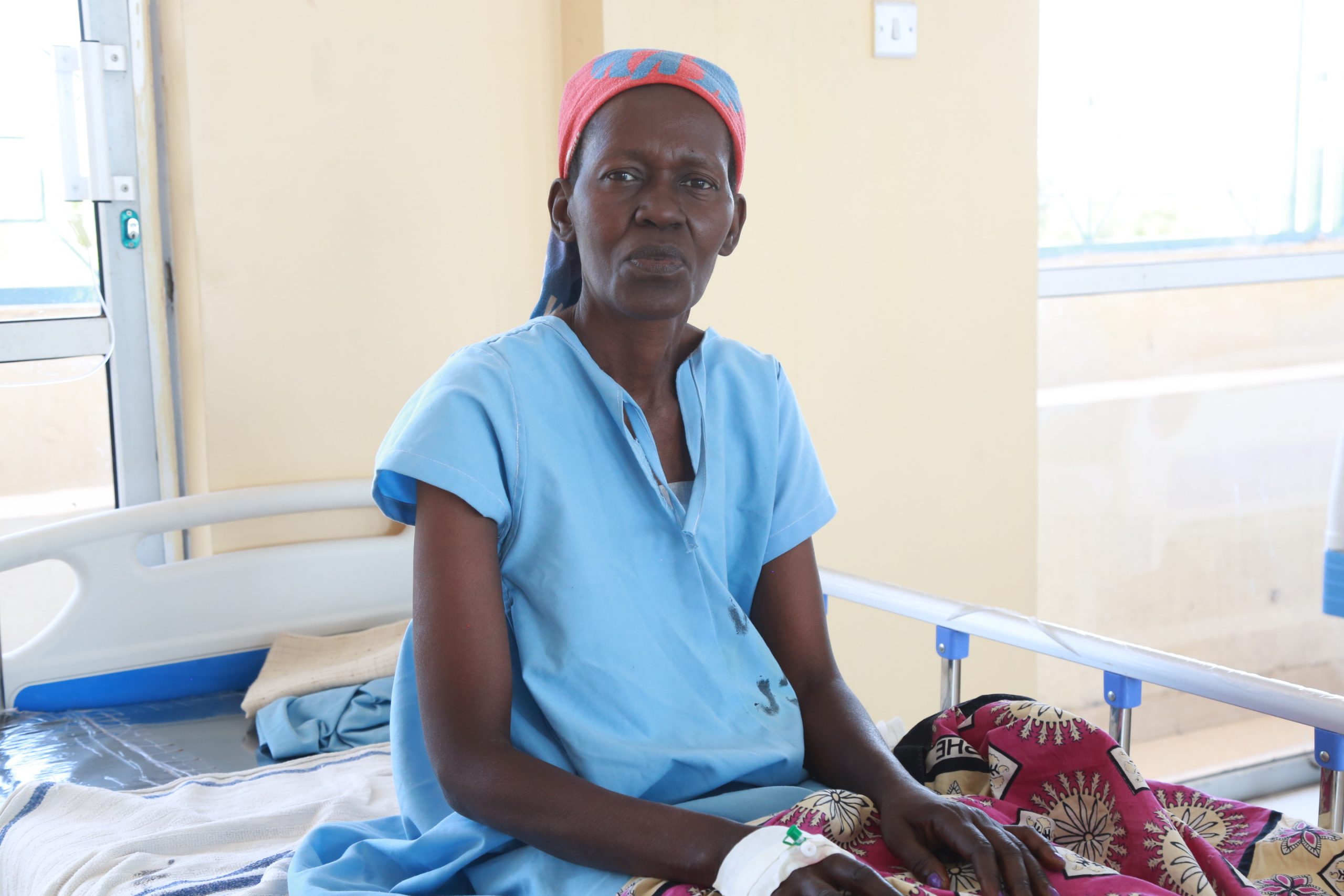
When 54-year-old Anne Florence Akinyi from Siaya was first told she had stage four breast cancer in 2022, her world seemed to stop. What began as a small, painless boil on her breast slowly grew into a wound that changed the rhythm of her life. “My breast looked swollen, like that of a young woman breastfeeding,” she recalls softly.
At first, Ms. Akinyi sought help at a local hospital in Siaya and later to the county’s referral hospital, where samples were taken and referred to Jaramogi Oginga Odinga Teaching and Referral Hospital (JOOTRH). There, she began chemotherapy and was prescribed medication but financial struggles stood in her way. With her lastborn son still in high school and no steady income, the mother of two could not afford the drugs or even transport for her appointments. Eventually, she stayed home for almost two years, hoping the swelling would subside.
For a while, it did. The lump seemed to disappear, giving her brief relief. But in February 2025, the nightmare returned aggressively. The swelling grew larger, her health deteriorated, and by October, the wound had begun to bleed persistently. “It reached a point where I couldn’t sit comfortably because my clothes would be soaked with blood,” she says.
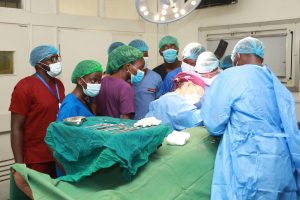
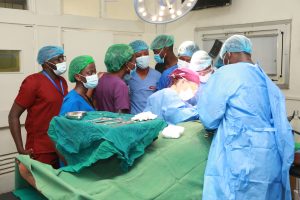
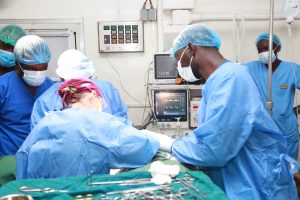
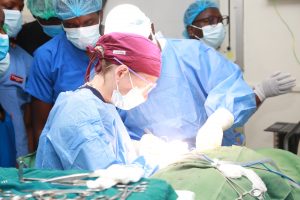
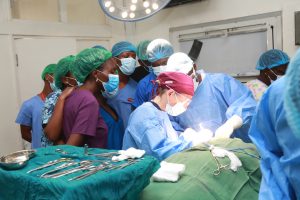
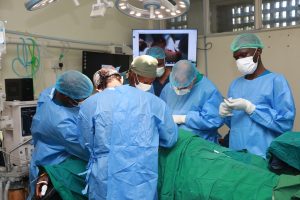
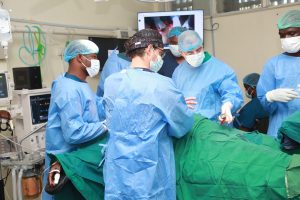
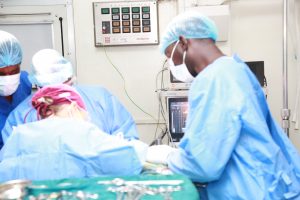
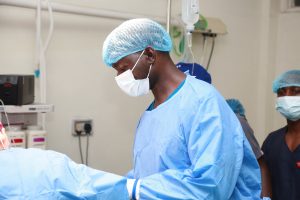
When she returned to JOOTRH for her oncology clinic three days ago, her medication had already run out. She was referred to Dr. Marwa Patrick, a Consultant General and Surgical Oncologist, who admitted her for urgent review. On Monday afternoon, Ms. Akinyi was wheeled into theatre. A modified radical mastectomy (the removal of her left breast) was successfully performed by a team of local and international specialists participating in the ongoing Breast and Sarcoma Surgical Camp, a partnership between JOOTRH and Maseno University.
Under ordinary circumstances, the surgery would have cost her KSh 134,400, an impossible figure for many patients. But thanks to her registration under the Social Health Authority (SHA), the entire procedure and follow-up care are fully covered.
Now recuperating in the female surgical ward, Ms. Akinyi smiles faintly. “I feel much better. There’s no pain now,” she says, grateful for the care she received. Before the surgery, even simple tasks were a struggle. Lifting heavy loads was impossible, though she still managed lighter chores like cooking and washing while seated.
Ms. Akinyi’s journey mirrors that of many women who silently endure the burden of late-stage cancer, often due to delayed diagnosis or financial hardship. The ongoing Breast and Sarcoma Surgical Camp, running from November 4th to 7th, 2025, has so far performed nine major surgeries, with more underway.
Ms. Akinyi now dreams of regaining her strength, returning home, and living without the constant fear and pain that once ruled her days.