Story by Lorraine Anyango and Photos by Ondari Ogega
Medical experts at the Jaramogi Oginga Odinga Teaching and Referral Hospital (JOOTRH) have raised the red flag over a sharp increase in life-threatening pregnancy complications, specifically preeclampsia and eclampsia, over the last 12 months.
Statistics from the regional referral hub reveal a worrying trend: out of every 300 births, approximately 30 women now present with high blood pressure complications. This is a staggering fourfold increase from previous records, which averaged only seven cases per 300 births.
Rosebella Apollo, the Deputy Director of Nursing and Maternity Nurse Manager, noted that the clinical presentation of these cases is defying global norms.
“We are observing a trend where women are presenting with high blood pressure complications in less than 20 weeks of gestation,” Ms. Apollo stated. “This is significantly earlier than what World Health Organization (WHO) guidelines indicate. We urgently need to conduct research to understand why this is happening.”
The severity of the condition has also led to a rise in secondary complications. In just one month, the facility recorded seven pregnant women with acute kidney injury resulting from preeclampsia. These patients required specialized dialysis at the hospital’s renal unit.
“This is an upward and worrying trend,” Ms. Apollo added, noting that many of these are referral cases from across the region.
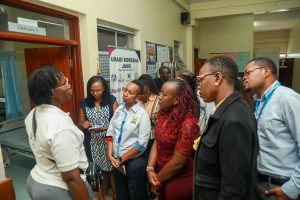
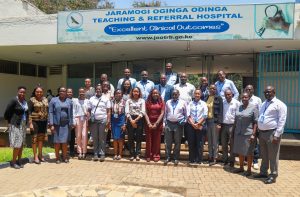
The concerns were highlighted during a high-level visit by the Child Health and Mortality Prevention Surveillance (CHAMPS) team, which was hosting the National Reproductive, Maternal, Newborn, and Child Health (RAMNCH) delegation. The team, led by Dr. Victor Akelo, was received by JOOTRH Senior Director of Nursing, Teresa Okiri.
The visit aimed to showcase how data-driven collaborations are being translated into actionable strategies to improve maternal and child health outcomes. Data from PRISMA, a sister study to CHAMPS, further corroborated the need for urgent solutions to the rising blood pressure crisis in pregnancy.
Dr. Florence Aweyo, presenting at the meeting, identified preeclampsia and eclampsia as leading causes of maternal mortality across study sites, including JOOTRH, Kuoyo Health Centre, Siaya County Referral Hospital, and Ting’wang’i.
In response to these findings, healthcare protocols in the region have been tightened. Lower-level facilities are now instructed to refer all suspected preeclampsia and eclampsia cases to JOOTRH immediately.
To bridge the gap, JOOTRH consultants now periodically visit primary healthcare facilities to screen expectant mothers and initiate early management. Additionally, maternity staff have undergone intensive capacity building to improve early detection.
Beyond maternal care, CHAMPS has bolstered the hospital’s Newborn Unit by donating pulse oximeters for infant monitoring and providing specialized training on Immediate Kangaroo Mother Care (KMC), ensuring that both mother and child have a fighting chance against these rising complications.