Story by Mercy Chloe, Caroline Nyongesa and Philister Adhiambo and Photos by Ian Obadha
When the tumour was finally discovered, it had already consumed nearly half of his upper jaw. It had spread dangerously close to his eye, threading its way towards the delicate tissues responsible for sight and speech. Eating had become almost impossible.
For Stephen Omondi, a father of two from Seme, what began as an ordinary toothache would eventually lead to a rare diagnosis and a life-changing surgery at Jaramogi Oginga Odinga Teaching and Referral Hospital (JOOTRH).
Mr. Omondi vividly remembers when everything changed. In June 2025, he developed a severe toothache accompanied by excruciating pain that drove him to seek treatment at a medical camp.
His aching tooth was extracted, and he believed his sleepless nights were finally over. Instead, the pain intensified. His jaw began swelling steadily, and despite relying on over-the-counter painkillers for months, the condition only worsened.
“I kept buying painkillers to relieve the pain. They only postponed the pain for a couple of months,” he recalls.
When the swelling continued to grow with no sign of improvement, Mr. Omondi sought further treatment at JOOTRH.
There, he came under the care of Dr. Anthony E. Ganda, an Oral and Maxillofacial Surgeon, who ordered further investigations. The examinations revealed a tumour in Mr. Omondi’s upper jaw.
“Pain is what brings most patients to us,” says Dr. Ganda. “Unfortunately, the warning signs of oral cancer can easily be mistaken for an ordinary toothache.”
He explains that symptoms such as loose or shifting teeth, movement of the eye socket, deteriorating vision and unexplained bleeding often overlap with common dental conditions, causing patients to delay seeking specialised care.
Further investigations confirmed that the tumour was cancerous.
Surgery offered the best chance of treatment, but it would be highly complex. The tumour’s size and location meant that Mr. Omondi’s vision, breathing, speech and ability to eat could all be affected during the procedure.
For Mr. Omondi, the recommendation for surgery came as a shock.
“When I came to the hospital, it never crossed my mind that I would undergo such a major operation,” he says. “I was afraid.”
His greatest wish was simple.
“I wanted my teeth to function normally again.”
That request shaped the surgical plan.
“His request required us to fabricate replacement teeth,” explains Dr. Ganda. “We collaborated with specialists from Eldoret, with part of the procedure being undertaken at JOOTRH and the rest completed there.”
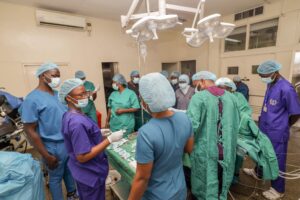
The surgery brought together nearly ten healthcare providers, including maxillofacial surgeons, anaesthetists, theatre nurses, prosthetic specialists and a visiting surgeon. The multidisciplinary team worked continuously for six hours to remove the tumour while preserving as many vital functions as possible.
For Dr. Ganda, Mr. Omondi was the fifth patient with such a complex condition that he had managed at JOOTRH. He says the case demonstrates how far the hospital has grown in delivering highly specialised surgical care as a Level Six referral hospital.
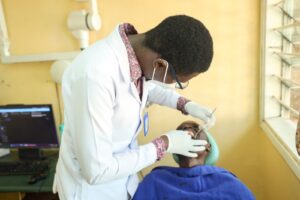
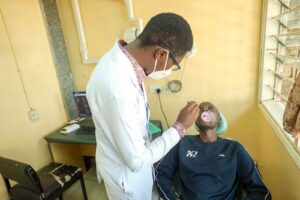
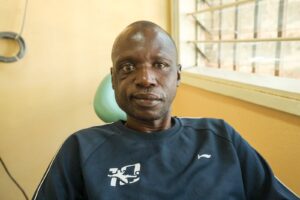
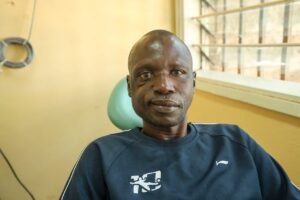
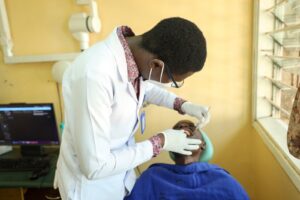
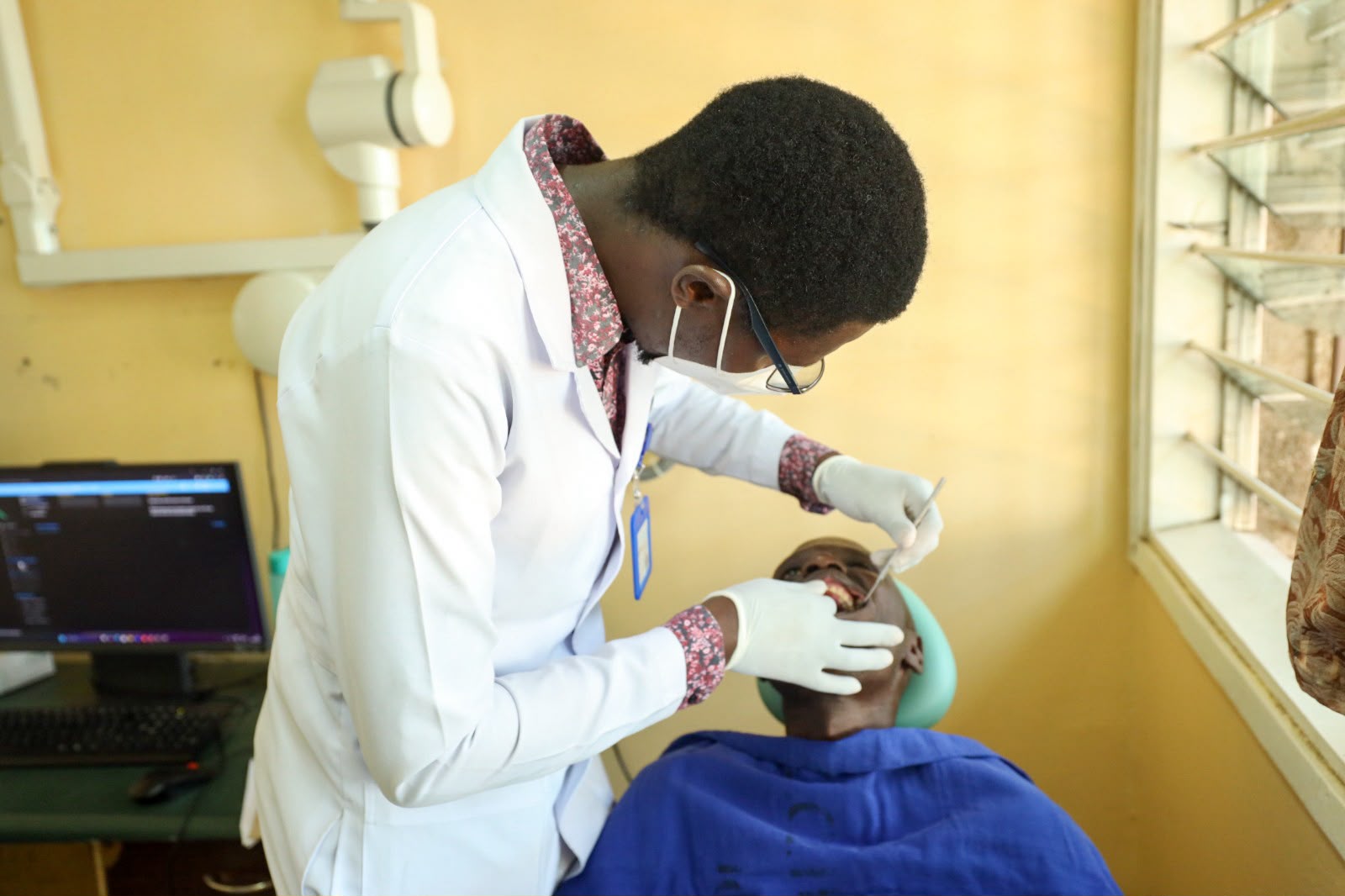
Nearly five months after surgery, Mr. Omondi returns to the clinic for his routine review wearing a smile that reflects how much his life has changed.
His recovery has been remarkable. He has returned to running his business, resumed eating, and continues to follow his doctors’ advice during his recovery journey.
He remains deeply grateful to the team that stood by him throughout the difficult months.
“They gave me hope,” he says. “They made sure I not only survived the surgery but also retained my speech and other important functions.”
For Dr. Ganda, Mr. Omondi’s recovery is one of the most rewarding moments of his career.
“We were able to preserve most of his functions while removing the tumour,” he says. “That has helped restore not only his health but also his confidence and self-esteem.”
Looking at his patient during a follow-up clinic, he smiles.
“Cancer is often seen as a death sentence, but Mr. Omondi is living proof that, with timely diagnosis, specialised care and teamwork, patients can continue living full and meaningful lives.”