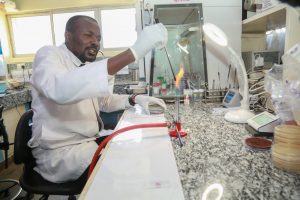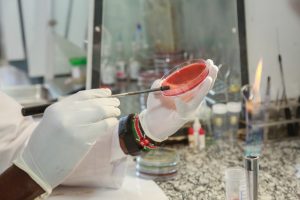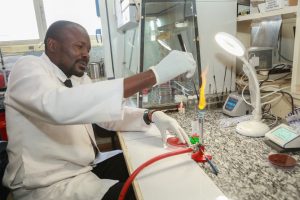
Story by Lorraine Anyango and photos by Ondari Ogega
A worrying finding from a new study indicates that 60% of market-ready fish in Kisumu are contaminated with Escherichia coli (E.coli), a common bacterium that is rapidly developing resistance to critical antibiotics.
The study, conducted by a research team at the Jaramogi Oginga Oginga Teaching and Referral Hospital (JOOTRH), tested 256 fish samples and found 153—or 60%—tested positive for E.Coli.
E.Coli is typically harmlessly found in the gut, but pathogenic strains are a leading cause of severe human infections, including urinary tract infections (UTIs), bloodstream infections (sepsis), and meningitis. When these strains acquire resistance genes, treating the resulting infections becomes difficult, leading to treatment failures, increased mortality, and higher healthcare costs.
Lead researcher Silas Onyango Awour, a clinical microbiologist at JOOTRH, highlighted the likely source of contamination.
“The high prevalence highlights a significant risk of bacterial contamination likely linked to improper waste disposal and inadequate hygiene along the supply chain,” Awour stated. He specifically pointed to environmental pollution as a driver, adding, “Pampers disposed along the road eventually find their way to the lake, and they are the main reason why the fish tested positive for E.Coli.”
The study’s findings reinforce the critical link between the aquaculture ecosystem and the global fight against Antimicrobial Resistance (AMR).
“These findings prove that aquaculture is one of the sources of AMR among our community members,” the researchers noted. Inappropriate use of antimicrobials in fish farming, combined with environmental residues from poor disposal, contributes to the emergence of zoonotic antibiotic-resistant bacteria, which can then be transmitted to humans through food consumption.
The research team included Eric O. Omwenga, Zipporah Gichana, Grace Ndeda, Jamie M. Reedy, and Theekshana Fernando.
The findings, shared during a recent World Fisheries Day event, prompted an immediate response from county leadership.
Kisumu County Deputy Governor Dr. Mathews Owili called for a follow-up study at landing beaches to trace the contamination to its ultimate source. Dr. Awour welcomed the recommendation and committed to considering this for future research.
The study serves as a strong call to action, rallying the government to strengthen regulations and enforcement mechanisms to monitor antibiotic usage in aquaculture and provide updated guidelines for the prudent use of antimicrobials.
The JOOTRH Anti-Microbial Resistance Committee has since developed a charter incorporating One Health (recognizing the link between human, animal, and environmental health) into its updated 2025 strategy.
It emphasizes the need for Cross-Sectoral Collaboration: Engaging the County Government, Beach Management Units (BMUs), Fisheries Department, and Public Health teams and Surveillance & Data Strengthening: Implementing structured sampling from lake water and fish for continuous microbiological analysis.
The committee also used the World Fisheries Day event to sensitize fisherfolk on AMR, safe fish handling, and hygiene practices, demonstrating that the fight against AMR is not confined to hospitals but spans communities, ecosystems, agriculture, and food systems.