Story by Esther Adhiambo, Lynne Ayuma and Photos by Ondari Ogega
“Why has the blood delayed yet my family members have already donated the blood?” Erick Ochieng’ asked in a worried voice, his family members nodding in agreement.
Erick was scheduled to undergo a skin grafting procedure following severe injuries. However, what he viewed as an unnecessary delay in receiving blood had become a source of anxiety for both him and his loved ones.
What the family did not know was that while donating blood is an act of generosity, ensuring that the blood is safe enough to save a life is a complex and costly process that begins long before it reaches a patient’s vein.
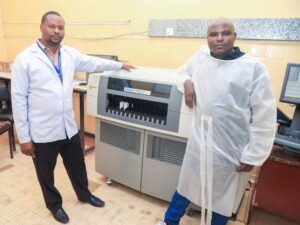
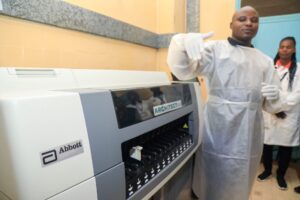
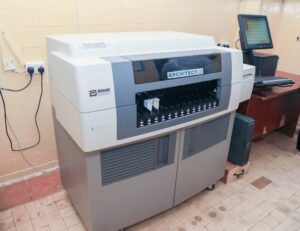
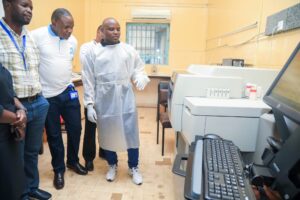
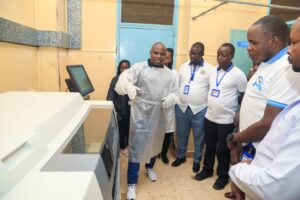
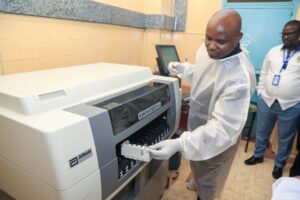
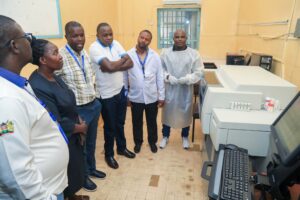
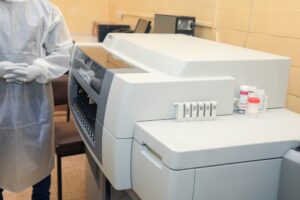
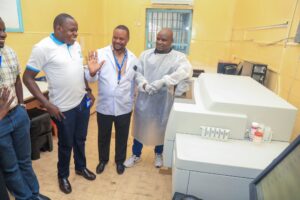
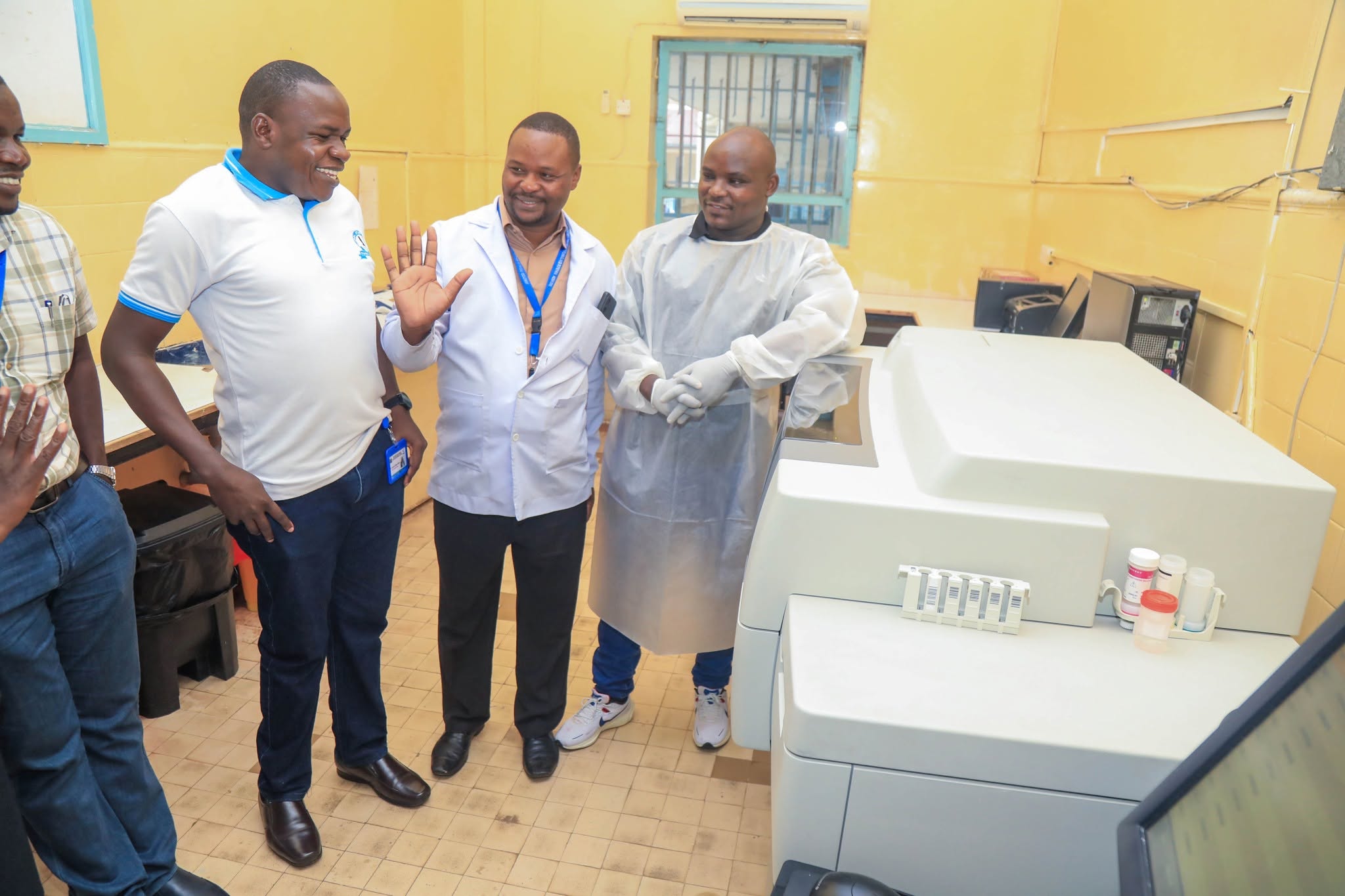
The availability of the fully automated blood screening analyzer at Jaramogi Oginga Odinga Teaching and Referral Hospital (JOOTRH) has transformed this delayed process, significantly improving the safety and reliability of blood transfusions for patients like Erick.
According to Kenneth Onyango a Medical laboratory technologist at JOOTRH , before any donated blood can be released for use, it must undergo rigorous screening to detect transfusion-transmissible infections such as HIV, Hepatitis B, Hepatitis C, and Syphilis. A single unit of infected blood can place a patient at risk of life-threatening complications, making screening one of the most important stages in blood transfusion services.
He also states that every unit of blood collected must be treated as potentially unsafe until proven otherwise through laboratory testing.
” Blood that tests positive for any of the screened infections is discarded, regardless of the urgent demand for blood in the hospital.” Kenneth said.
The medical laboratory technologist further explained that each laboratory test comes at a cost. Screening a single unit for HIV costs approximately KES 400, while Hepatitis B and Hepatitis C screening each cost around KES 300. Syphilis testing adds another KES 150. Before these tests are performed, the donor undergoes hemoglobin testing costing about KES 100, while ABO blood grouping and RhD typing require additional laboratory reagents valued at approximately KES 150 and KES 100 respectively. These are only part of the expenses involved before blood is declared safe for transfusion.
The newly installed automated analyzer has replaced many of the challenges associated with manual and semi-automated screening methods. The machine uses advanced technology to process large numbers of blood samples with greater accuracy, reducing the chances of human error while delivering more reliable results. It can simultaneously test multiple samples, improving efficiency in a facility that serves thousands of patients from Kisumu County and the larger Lake Region.
For families waiting for loved ones to receive blood, the delay can often be frustrating. Yet behind every unit released for transfusion lies a process designed to protect patients from acquiring additional illnesses while seeking treatment.
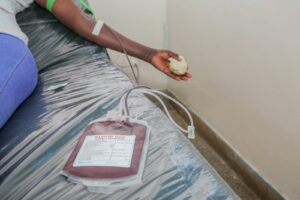
The cost of preparing blood extends far beyond laboratory screening. Every donation is collected in a sterile 450-millilitre blood collection bag costing about KES 600, before undergoing centrifugation and component preparation to separate red blood cells, plasma and platelets according to patient needs. The blood is then sealed using a blood bag sealer, plasma is extracted using a plasma expresser, and the products are preserved in monitored blood bank refrigerators maintained between 2°C and 6°C under a strict cold-chain system.
Before transfusion, additional patient safety procedures are performed. These include blood grouping, antibody screening and crossmatching, which alone costs approximately KES 400 per patient to confirm compatibility between donor and recipient. The blood is then administered using a sterile blood giving set, intravenous cannula and normal saline while healthcare workers continuously monitor the patient for any adverse transfusion reactions.
For patients requiring regular transfusions, such as those living with sickle cell disease, the importance of safe blood cannot be overstated. Blood grouping and compatibility testing help ensure they receive the correct blood type, minimizing the risk of transfusion reactions and other complications.
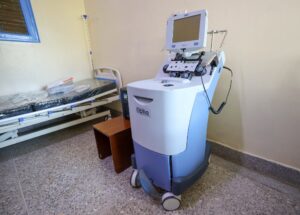
Once screened and cleared, blood is carefully stored at temperatures between 2°C and 6°C to preserve its quality. Some units are further processed into components, allowing one donation to benefit multiple patients. Plasma is separated and stored for patients with clotting disorders, while red blood cells are reserved for those suffering from severe anemia, trauma or undergoing surgery.
Health experts estimate that by the time one unit of donated blood has been collected, screened, processed, stored, transported and safely transfused, the total investment ranges between KES 5,000 and KES 7,500. This amount covers donor recruitment, laboratory reagents, equipment maintenance, cold-chain storage, compatibility testing, transfusion consumables, documentation and waste management.
Many people mistakenly believe that the hospital sells blood when they are required to pay for a transfusion. In reality, JOOTRH does not sell blood. Under the Social Health Authority (SHA), basic blood transfusions for ward patients are provided free of charge or are heavily subsidized, ensuring that eligible patients can access this life-saving service without paying for the donated blood itself.
As Erick and his family waited outside the theatre, they gradually came to understand that the delay was not caused by negligence, but by a system working to ensure his safety. The blood donated by relatives and friends was not simply being stored; it was undergoing a series of meticulous checks designed to guarantee that when it finally reached his body, it would heal rather than harm.
In a healthcare environment where every drop of blood can mean the difference between life and death, JOOTRH’s investment in automated blood screening technology represents more than a technological upgrade. It is a commitment to patient safety, quality healthcare and the assurance that every transfusion administered within the hospital meets the highest possible standards.
For patients like Erick, the wait may feel long. But for healthcare professionals entrusted with safeguarding lives, every minute spent screening blood is an investment in a safer outcome and a healthier future.