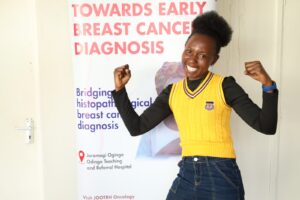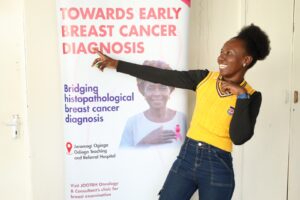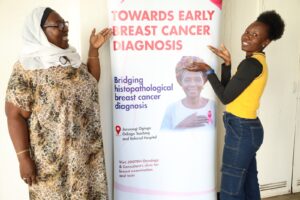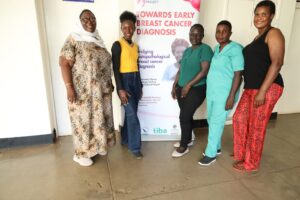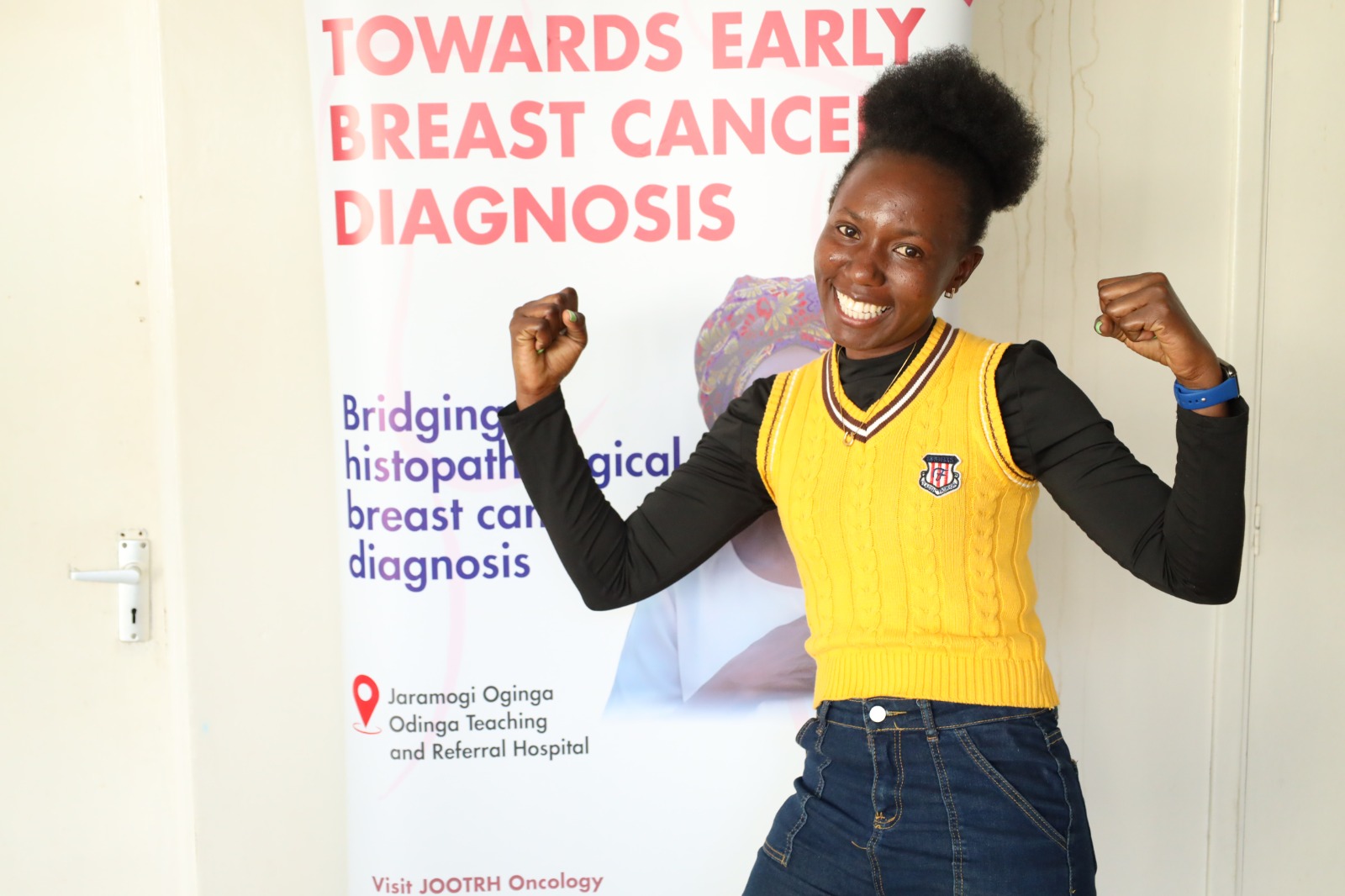
Story by Lynne Ayuma and Esther Adhiambo and Photos by Lorraine Faith
“No more drugs.” Those were the words that brought tears of relief and gratitude to Laura Akinyi after months of battling Stage Three colon cancer.
For the 28-year-old from Kisumu, the announcement that she was cancer-free marked the end of a painful chapter defined by surgeries, chemotherapy, uncertainty, and countless hospital visits.
“It was a huge celebration,” Laura recalls with a smile. “The first thing I thought was, ‘Thank God, no more drugs.’ That was one of the hardest parts of treatment. I was grateful to have survived.”
Today, Laura’s story is one of courage, resilience, and hope. Having overcome a life-threatening illness, she now uses her experience to support other cancer patients, reminding them that a diagnosis is not the end of the road.
But the journey to that moment of celebration was long and difficult.
At just 24 years old, Laura was in the prime of her youth, pursuing opportunities and looking forward to building her future. Little did she know that a series of unexplained health complications would bring her life to an unexpected halt.
Initially, her symptoms appeared ordinary. Doctors treated her for conditions such as H. pylori infection, acidity, and amoeba. However, despite medication, her condition continued to worsen. Severe abdominal pain and a swollen abdomen eventually prompted further investigations.
“The first signs were not noticeable,” Laura recalls. “It was only after things got worse that doctors decided to conduct further examinations.”
A major turning point came during surgery, where tissue samples were taken for laboratory analysis. The histology report delivered devastating news: Laura had colon cancer.
The diagnosis came as a shock. Like many patients, she knew very little about cancer treatment and had to quickly learn what lay ahead. Following her diagnosis, Laura began treatment at Jaramogi Oginga Odinga Teaching and Referral Hospital (JOOTRH), where she underwent surgery followed by chemotherapy.
Laura’s experience mirrors a growing global cancer burden. According to the World Health Organization (WHO), colorectal cancer is the third most commonly diagnosed cancer worldwide, accounting for about 10 per cent of all cancer cases. In 2022, an estimated 1.9 million new cases and more than 900,000 deaths were recorded globally, making it the second leading cause of cancer-related deaths. Health experts note that while the disease is more common among older adults, cases among younger people are increasingly being reported.
By the time the cancer was discovered, it had already progressed to Stage Three.
What followed was a difficult journey filled with chemotherapy sessions and their accompanying side effects. Laura admits that before treatment, she imagined chemotherapy involved a machine.
“I was surprised to learn that chemotherapy was given through a drip. I thought it would be easy until I experienced what it does to your body,” she says.
The treatment brought nausea, pain, numbness in her hands, skin changes, diarrhoea, stomach pains, and emotional exhaustion. Each chemotherapy cycle seemed to come with a different challenge. Yet amid the physical and emotional toll, Laura found strength in the unwavering support of her family and friends.
Like many patients battling chronic illnesses, financial challenges also emerged. Treatment costs occasionally threatened to interrupt her care until she enrolled in health insurance coverage, which eased the burden and enabled her to continue treatment consistently.
After months of surgeries, medication, and chemotherapy, Laura finally received the news she had long prayed for: she was cancer-free. The moment marked the end of a gruelling chapter and the beginning of a new one centred on healing, gratitude, and renewed purpose.
Yet Laura says survivorship comes with its own challenges. While treatment may end, the fear of recurrence often lingers.
“People tell you that you’re cancer-free, but nobody talks about the fear of recurrence,” she explains. “Every check-up comes with anxiety. The ‘what ifs’ never completely disappear.”
Determined to transform her experience into something meaningful, Laura now volunteers with a cancer support group at JOOTRH, helping create safe spaces where patients can share their fears, experiences, and hopes. Having walked the same path, she understands the emotional burden of a cancer diagnosis and offers encouragement drawn from lived experience.
Laura remains grateful to the healthcare workers who supported her throughout treatment.
“The staff were incredibly supportive. They treated me with kindness and compassion during some of the most difficult moments of my life,” she says.
As the world marks National Cancer Survivors Month this June, Laura’s journey serves as a powerful reminder that cancer is not a death sentence. Today, she is not only a survivor but a source of hope, using her experience to encourage others and prove that life after cancer is possible.