Story by Sherine Atieno and Photos by Ian Obadha
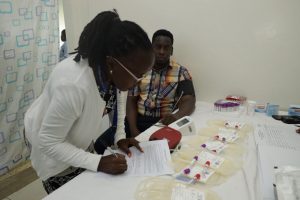
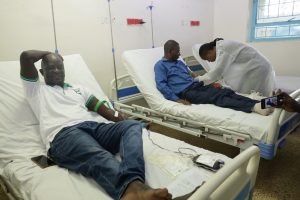
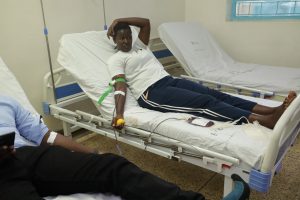
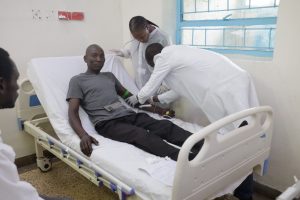
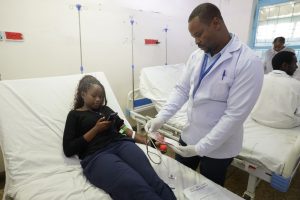
In a striking departure from their usual roles as observers of tragedy, 63 journalists from the Kisumu Journalists Network (KJN) swapped their notebooks for donation needles at the Jaramogi Oginga Odinga Teaching and Referral Hospital (JOOTRH) this week.
Marking World Press Freedom Day under the theme “Shaping a Future at Peace,” the scribes moved beyond reporting the news to becoming the news—donating blood to bolster the region’s depleted reserves.
The initiative, supported by the Media Council of Kenya (MCK), signalled a growing commitment to “solution journalism.” As frequent first responders at accident scenes, the journalists noted that reporting on a crisis is often not enough. “Modern journalism must not only highlight societal challenges but also actively participate in addressing them,” stated Rushdie Oudia, KJN Chairperson.
The donation arrives at a crucial moment for JOOTRH. The hospital’s CEO, Dr. Joshua Okise, emphasized that blood is the backbone of their healthcare delivery, particularly for patients battling Sickle Cell Disease. There is a High Demand for blood as the hospital now offers apheresis procedures; every single procedure requires up to 10 pints of blood per patient.
Jootrh continues to expand its Blood Transfusion Unit to meet the growing needs of its critical care services.
Mrs Lorraine Opondo, Head of Corporate Communications at JOOTRH, highlighted a different kind of lifesaving work: the fight against misinformation.
“At our hospital, we often say that medicine treats the patient, but information treats the community,” Opondo remarked. She noted that while doctors handle the physical healing, journalists serve as the frontline defense against health-related myths that can jeopardize public safety.
The event also served to reinforce the bridge between the medical fraternity and the Fourth Estate. Hospital leadership reaffirmed their commitment to an open-door policy, inviting journalists to continue their role as watchdogs.
“Public health relies on public trust,” the hospital administration noted. “We celebrate your right to ask the tough questions. Your scrutiny makes our institution better.”
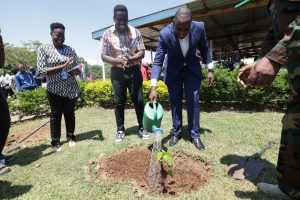
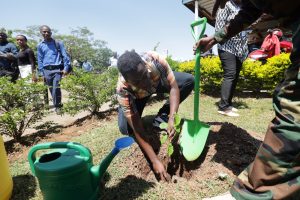
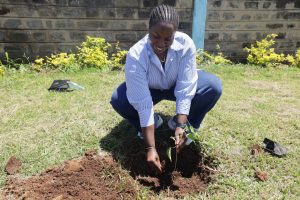
To close the day, the fraternity joined the Kenya Forest Service to plant trees on the hospital grounds. This gesture aligns with Kenya’s national goal of planting 15 billion trees by 2032, symbolizing the media’s long-term commitment to environmental and community resilience.
With a membership exceeding 80, the Kisumu Journalists Network, alongside the Kenya Correspondents Association, proved that the power of the press extends far beyond the printed word—it lies in the pulse of the community they serve.